
China has secretly entered into an agreement with Pakistan to construct a third nuclear reactor at Chashma in Punjab province that the Obama administration says will violate Beijing's promises under an international anti-nuclear weapons accord, a media report said.
India has offered to place 14 of the 22 thermal power reactors under IAEA safeguards in a phased manner between 2006-14, Dr Kakodkar told a media conference, adding the agreement would not affect the country's strategic programme in any respect.
The scientists, who met the chairman of the Atomic Energy Commission, also said that India has been asked to participate in the international efforts on nuclear non-proliferation, with a policy that is congruent to that of the US.
The chief inspector said that the main problem lies in locating such chemical weapons as the deadly VX nerve agent Iraq was known to have in 1998 but are not on the Iraqi declaration.
Atomic Energy Commission (AEC) Chairman Anil Kakodkar has said work on India's nuclear programmes will continue despite media reports of the country's nuclear power plants being placed on alert and being made more secure to prevent a terror strike.
Nuke scientists support AEC chief's contention

'Our problem is not a budget deficit but a trust deficit. We need to trust our institutions and industries to innovate and lead. That is the way forward for India.'
India will complete the process of putting its 14 civilian nuclear facilities under IAEA safeguards by the year end as part of a commitment made under the Indo-US nuclear deal.

Putin also told his French counterpart that Kyiv does not comply with the agreements reached with Moscow on the evacuation of civilians from combat areas, the Kremlin said.

Were the May 1988 nuclear tests a success? 20 years after Pokharan, a look back at those decisive atomic tests through the eyes of someone who knew.
'Chinese are going bang, bang, bang building 30-35 reactors.' 'We should announce a programme of 50 new reactors and show that we mean business on the ground and not just announcements.'
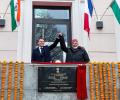
Prime Minister Narendra Modi and French President Emmanuel Macron have called for enhancing trade and investment ties between their countries and committed to further deepening their engagement in the Indo-Pacific. They discussed a full spectrum of bilateral relations, including key global and regional issues, and stressed the urgent need for reform in the United Nations Security Council. The leaders also underscored their commitment to ensuring the global AI sector can drive positive social, economic, and environmental outcomes.
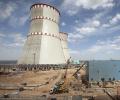
China on Tuesday inked an agreement worth a whopping USD 4.8 billion with cash-strapped Pakistan to set up a 1,200-megawatt nuclear power plant as a sign of increasing strategic cooperation between the two all-weather allies.

If as critics point out, the environmental impact assessment study was commissioned only after the auction process got underway with not all the stakeholders getting to know of it, then the government has already compromised the trust it could have enjoyed with Kerala's public including its coastal communities, points out Shyam G Menon.
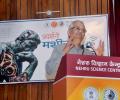
'Why should we disclose classified information to satisfy those who doubt our Hydrogen Bomb capability?'

'There has definitely been a breakthrough in the nuclear logjam. It is good to see nuclear energy back on the rails,' says Dr Anil Kakodkar, former chairman, Atomic Energy Commission.

US urges New Delhi to align its nuclear liability law with the international convention
The Kudankulam Nuclear Power Plant will attain criticality by mid-night on Saturday, Atomic Energy Commission Chairman S K Sinha announced in Tirunelveli.

Chinese foreign ministry spokesperson, Hua Chunying said China-Pakistan cooperation is in accordance with the 48-member nuclear club, which supervises global nuclear commerce.

It's time India re-visited its Western alliances for the attitude and approach that the West reserves for the nation when it comes to security cooperation of the kind that they might not have visualised outside of China, India's bug-bear, asserts N Sathiya Moorthy.
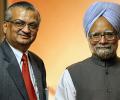
'Dr Singh, visibly relieved, said, 'Yesterday night I couldn't sleep. I stayed awake, praying throughout. You have saved the country'.' A fascinating excerpt from former atomic energy chief Dr Anil Kakodkar's memoir Fire And Fury: Transforming India's Strategic Identity.
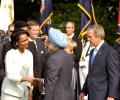
The night before Dr Singh was to meet President Bush, he said he could not sign the agreement.
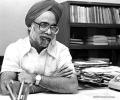
What stood out in his 15-year journey as a member of the political executive at the Centre was his glowing record as India's most successful and effective finance minister. Both as prime minister and finance minister, he understood the importance of gradualism, except when the economy or the polity was in a crisis.
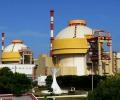
'Decisions on nuclear power have so far been taken by a small select group, primarily interested in profiteering from their actions, stating 'secrecy' as necessary from the national security point.' 'This argument is false, because we are dealing with the 'civilian' nuclear power sector, which is open even to the IAEA,' says Dr A Gopalakrishnan, former chairman of the Atomic Energy Regulatory Board.
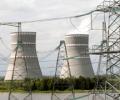
Under a 2010 nuclear liability law, nuclear equipment suppliers are liable for damages from an accident, which companies say is a sharp deviation from international norms
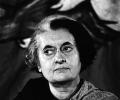
'She showed courage at every turn in her political career.'
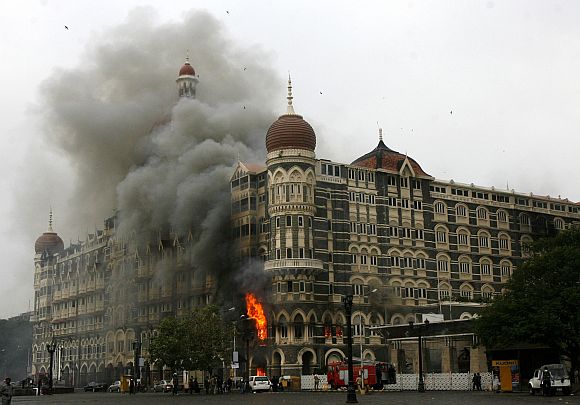
'Headley's testimony indicates to what extent the Pakistan government and its proxies can go to destroy not only Indian scientific talent but also international expertise.'

While nuclear engineers cheer KNPP's first full operation, on nine other sites which house atomic reactors, scientists spend sleepless nights.

Manmohan Singh had told his team to "call off" the Indo-US civil nuclear deal a night before its scheduled announcement by President George Bush after Americans came with a killer proposal to let India have just two of its nuclear reactors out of the international safeguards, a top aide of the former Prime Minister has said.
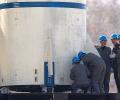
Even as Pakistan continues to urge the international community to accept its membership to the Nuclear Suppliers Group, highly placed sources in the United States who are involved with the tracking of nuclear commerce have claimed that Islamabad is still selling nuclear materials to North Korea.

Vajpayee had always felt that India must act with conviction and panache. He decided that, irrespective of the attendant risks, he would undertake what many felt was a precarious course. A fascinating excerpt from N K Singh's Portraits Of Power: Half A Century Of Being At Ringside on Atalji's 96th birthday, December 25.

Modi's critics will say that he has put up cement and steel structures, but weakened the institutions of governance whereas Nehru strengthened them, observes T N Ninan.

Immediate NSG membership will not help India realise its nuclear ambitions any faster. It could have easily left the process take its own course, instead of running a high-stakes campaign to get in, says B S Raghavan.
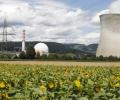
'We need uranium to fuel our reactors. Our scientists and engineers have been handling uranium safely since 1967. They must not feel disheartened by the activities of well motivated local or foreign agencies.'

Brand India's societal divisions and distortions have remained as much relevant in 'liberal' America and Europe as it still is in the structurally stratified Indian society of the 21st century, observes N Sathiya Moorthy.

India has built two top-secret facilities in Karnataka to enrich uranium in pursuit of its hydrogen bomb dream.

BWith a distracted president brooding in the White House, Pompeo seems to think his day has come. He seems to be pushing a personal agenda before a target audience in America, observes Ambassador M K Bhadrakumar.
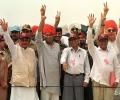
'1998-1999 was the only year in the last quarter century that India had net-negative foreign investment.' 'Foreign money ran away from India that year because capital is a coward and does not like uncertainty of the sort produced by such casual treatment of a destructive technology,' says Aakar Patel.

20 years ago this day, May 11, 1998, India conducted its second nuclear test at Pokharan in Rajasthan. In a fascinating interview on Rediff.com, K Subrahmanyam revealed how Indian PMs reacted to nuclear ambitions.

The powerful United Nations Security Council on Monday unanimously adopted a resolution that endorses the landmark nuclear deal between Iran and six world powers.
